Region 01 · Content Library
Learn Mandarin with Chinese Media
The best Mainland Chinese YouTube talks, podcasts, social platforms and Netflix dramas for learning Mandarin, organised by format so you can go straight to what fits your study session. Everything here is in simplified characters and native Mainland speech. Learning traditional characters instead? See the Taiwanese guide.

 Netflix
 YouTube
 Weibo
Weibo
 Baidu
Baidu
YouTube Channels & Podcasts
Native Mainland channels and podcasts with selectable Chinese subtitle tracks. Use these when you want authentic speech rather than learner-targeted content. Watching with Renshi lets you click any word in the subtitles and break down the sentence without leaving the video.
-
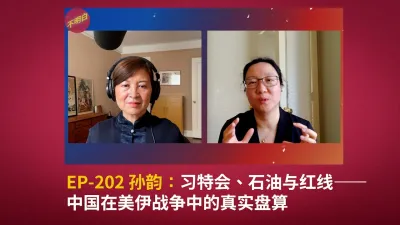
不明白播客
Long-form current affairs podcast built around serious interviews and sharp political analysis. Best for learners who want dense, native-speed discussion with educated Mainland phrasing and public-intellectual vocabulary.
-

Hung Huang
Media veteran Hong Huang moves easily between memoir, culture and blunt social observation. The tone is conversational but unmistakably native, with plenty of personality-driven spoken Mandarin.
-

一席 YiXi
China's best-known talk stage for essays, lectures and personal testimony. Great for polished formal Mandarin, structured argument, and a wider range of speakers than a single-host show.
-

三個水槍手
A roundtable-style podcast with fast exchanges, disagreement and social commentary. It feels much closer to how native speakers actually argue, joke and qualify their opinions in long conversation.
-

王志安
Journalist-style commentary built around news clips, interviews and long-form explanation. One of the stronger auto-CC exceptions: the content is clearly native and the speech is useful for modern public-affairs Mandarin.
Thumbnail and subtitle check from a representative episode reviewed on March 14, 2026. Recheck CC availability before assigning a specific video.
Reading & Social
Text-first platforms where Mainland internet culture, slang, headlines and public reactions show up in written form. Good for reading practice that feels current instead of textbook-clean.
-
Weibo
Mainland China's fastest-moving social feed for celebrity news, politics, memes and breaking reactions. Ideal for tracking what people are actually saying right now and how internet phrasing shifts in real time.
-
Baidu Tieba
Forum-style discussion spaces organised around interests, fandoms, games, schools and local topics. Useful when you want longer user-generated threads and a messier, more colloquial written register.
Netflix Dramas & Films
Mainland series and films worth pairing with dual subtitles. These picks cover family drama, workplace language, romance and crime so you can choose by vocabulary domain rather than just genre.
-

以家人之名 (Go Ahead)
A family-centred drama loaded with everyday banter, conflict, teasing and emotional reconciliation. One of the better choices for hearing domestic Mandarin across different ages, and the most approachable title here.
-

在暴雪时分 (Amidst a Snowstorm of Love)
Romance with a sports backdrop, travel scenes and plenty of soft-spoken modern dialogue. Good for learners who want cleaner contemporary speech without losing a native feel.
-

三十而已 (Nothing But Thirty)
Three women navigate work, marriage, money and status anxiety in Shanghai. The dialogue is contemporary, urban and full of relationship and social-pressure vocabulary.
-

理智派生活 (The Rational Life)
Office politics, generational expectations and modern dating all run through this workplace drama. Strong pick for professional Mandarin, HR language and polished urban conversation.
-

人生大事 (Lighting Up the Stars)
A moving film about grief, caregiving and unexpected family bonds. The emotional register is grounded and natural, making it strong for everyday spoken Mandarin with feeling behind it.
-

孤注一擲 (No More Bets)
A scam-thriller built around fraud compounds, online deception and survival under pressure. Excellent for crime, tech-adjacent vocabulary and tense high-stakes dialogue.
Availability varies by country. Confirm access before planning study sessions.
Mainland vs Taiwanese Mandarin
The two are the same language and speakers understand each other without difficulty, but the written and spoken conventions diverge. The Mainland uses simplified characters and teaches pronunciation with pinyin, where Taiwan uses traditional characters and zhuyin. Mainland speech, especially in the north, keeps the erhua ending, so 哪儿 and 一点儿 are everyday, and retroflex initials are more sharply curled. The vocabulary differs too:
| Meaning | Mainland | Taiwan |
|---|---|---|
| Video | 视频 | 影片 |
| Internet, network | 网络 | 網路 |
| Information | 信息 | 資訊 |
| Bicycle | 自行车 | 腳踏車 |
| Taxi | 出租车 | 計程車 |
| Potato | 土豆 | 馬鈴薯 |
| Pineapple | 菠萝 | 鳳梨 |
Watch 土豆: it is potato on the Mainland but usually peanut in Taiwan. Context resolves it, which is exactly what immersion teaches and a wordlist cannot. More on internet slang in the FAQ below.
Frequently Asked Questions
Which Mainland Chinese content is easiest to start with?
Family and romance drama is the gentlest entry point, because the language is everyday and the visuals carry a lot of the meaning. 以家人之名 (Go Ahead) and 在暴雪时分 (Amidst a Snowstorm of Love) are the most approachable titles on this page. Leave the current-affairs podcasts such as 不明白播客 until later: they run at native speed with dense public-intellectual vocabulary.
Is Mainland Mandarin different from Taiwanese Mandarin?
They are the same language and mutually intelligible, but differ in three practical ways. Script: the Mainland uses simplified characters and pinyin, Taiwan uses traditional characters and zhuyin. Pronunciation: Mainland Mandarin, especially in the north, uses the erhua ending, so 哪儿 and 一点儿 are normal, and retroflex initials in 是 and 知道 are more sharply curled. Vocabulary: see the table above.
Register differs too. Mainland speech is generally more direct than the particle-softened Taiwanese style, though this varies far more by person and region than by border.
What Mainland Chinese internet slang should I know?
A starter set, most of it born on Weibo and Tieba: 内卷 (involution, the pointless competitive grind), 躺平 (lying flat, opting out of that grind), 摆烂 (letting it rot, giving up entirely), 打工人 (a wage worker, used self-deprecatingly), 破防 (emotionally broken through, moved or upset) and yyds, short for 永远的神, meaning the greatest of all time.
These terms carry real cultural weight. 内卷 and 躺平 in particular are how a generation talks about work and burnout, so understanding them tells you more about contemporary China than a chapter of vocabulary would.
Do Mainland Chinese shows use simplified or traditional characters?
Simplified characters (简体字). Mainland subtitles, Weibo, Baidu Tieba and news sites all use simplified characters, and pronunciation is taught with pinyin. If your goal is simplified characters and HSK vocabulary, Mainland media is the material to build your routine around.
What are the best Chinese dramas for learning Mandarin?
Contemporary, dialogue-heavy dramas work best. 以家人之名 (Go Ahead) is strong for everyday family conversation, 三十而已 (Nothing But Thirty) for urban and workplace language, and 理智派生活 (The Rational Life) for professional and office vocabulary.
How do I study effectively from Chinese YouTube and Netflix?
Watch with dual subtitles so you can read along, look up unfamiliar words without leaving the video, and break the sentence down when the structure rather than the vocabulary is what lost you. Then save the vocabulary and review it as flashcards, and re-watch the clip: the second pass is where most of the retention happens.